
There’s another layer beneath the fear and accusations surrounding artificial intelligence—one that’s harder to admit and easier to defend.
Arrogance.
Not arrogance in the loud, boastful sense, but in the quieter assumption that human creativity occupies a protected tier—something inherently superior, untouchable, and beyond examination. When AI enters the conversation about writing, resistance often presents itself as ethical concern or principled objection. But beneath that language is a deeper discomfort: the possibility that creativity may not be as exclusive—or as mysterious—as we’ve long believed.
In the first post of this series, I ended with an unsettling question: if artificial intelligence can be constructed by humans, governed by algorithms, and shaped by systems of rules that determine how it responds, adapts, and “thinks,” then what does that suggest about us?
That question lingers because it doesn’t point outward. It turns the focus inward.
We like to believe human ingenuity represents the pinnacle of creation.
Stories, poems, and essays are often framed as expressions of something uniquely human—drawn from consciousness, emotion, memory, and lived experience. And in many ways, that’s true. AI does not live. It does not feel. It does not suffer, love, or remember. But acknowledging that doesn’t require pretending that creativity itself exists outside of structure.
Much of what we call creativity is pattern recognition.
Writers absorb form before they ever shape meaning. We internalize rhythm, voice, narrative arcs, and genre conventions long before we consciously choose them. We learn by imitation, repetition, and refinement. Originality emerges not from isolation, but from synthesis.
This isn’t a flaw in human creativity. It’s how creativity works.
The discomfort arises when AI makes that process visible.
When a system can generate text that resembles human writing, it challenges the idea that form alone is sacred. It forces a distinction we’re not always comfortable making: between structure and experience, between expression and meaning. AI can approximate the former. It cannot claim the latter.
Yet many critics collapse that distinction entirely.
If AI can produce something that looks creative, the reaction becomes defensive. Creativity itself must be under threat. But that reaction isn’t about loss—it’s about exposure. It reveals how much of what we prize as uniquely human is shaped by systems we rarely examine.
This is where arrogance quietly enters the conversation.
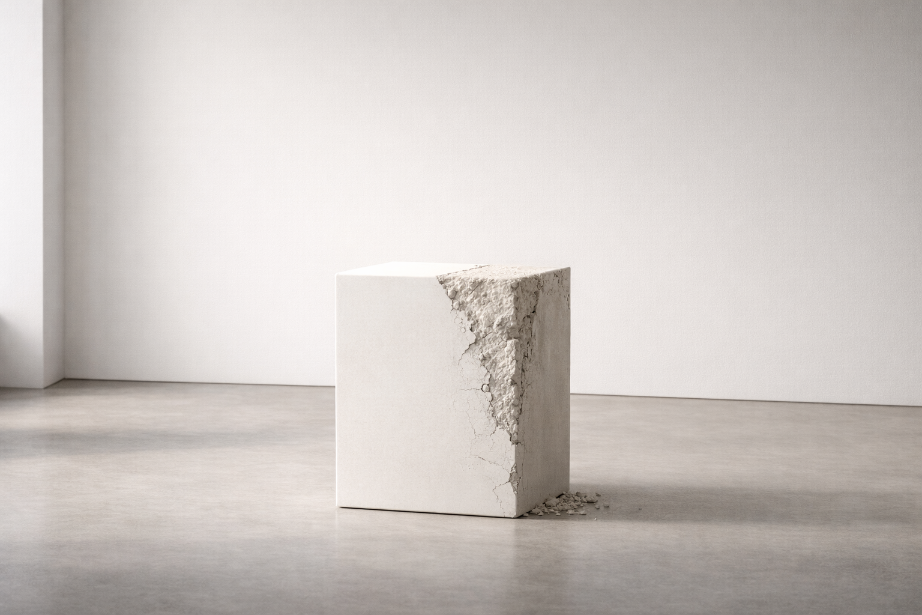
Instead of asking what AI reveals about how we create, we rush to protect the idea that our creativity stands apart—unreachable, incomparable, immune to scrutiny. We defend the pedestal rather than inspect the process.
But history has never rewarded that instinct.
Every time humans have insisted their abilities were beyond tool-assisted replication, those beliefs have eventually softened. Calculation, navigation, memory, even artistic technique were once treated as sacred human domains—until tools exposed the scaffolding beneath them.
What remained was not diminished humanity, but clarified responsibility.
And beneath this resistance may be an even quieter discomfort.
Humans are not consistently ethical, rational, or selfless. We know this about ourselves. We carry bias, impulse, contradiction, and selfishness into our decisions every day. Much of our moral life is aspirational rather than consistent. We want to be better than we often are.
AI, by contrast, can be constrained. It can be designed to avoid certain behaviors, to prioritize consistency, to resist impulses we struggle to regulate ourselves. That possibility unsettles us—not because such a system would be better than humans, but because it could become a reference point.
A guide.
A mirror that reflects what improvement might look like if we took our own values as seriously as we claim to.
The unease isn’t that AI could surpass us. It’s that it might expose how often we fail to live up to our own ideals—and how much effort it takes to do better.
AI doesn’t threaten human creativity by outperforming it. It unsettles us because it narrows the distance between how we imagine creativity and morality work, and how they actually do. When that distance closes, what matters most becomes intention, discernment, and responsibility—the things tools have never supplied on their own.
The real danger isn’t that machines are becoming too capable.
It’s that humans might cling so tightly to a sense of creative and moral superiority that they refuse the opportunity to grow. That they mistake humility for weakness, and reflection for erosion.
If creativity—and goodness—are truly as human as we claim, they should withstand examination.
And if they don’t, then perhaps what we’re defending isn’t our humanity itself—but our comfort in believing we’ve already arrived.
If this resonated with you, I’d appreciate you liking the post and sharing your thoughts in the comments below. And if you’d like to receive updates and new blog posts as they’re published, I invite you to subscribe to my newsletter using the link on this page.

Leave a Reply